


The Dog Who Never Limped – A Canine Physiotherapist's Perspective

By Sina-Marie Peuss

One of the most common conversations I have with dog owners begins with exactly the same sentence:
"He doesn't seem to be in pain."
The dog standing in front of me is wagging his tail. He happily takes treats, explores the room and greets me with curiosity. To the owner, there is no obvious reason to worry.
And honestly, they are often right.
The dog is...
still enjoying life.
still going for walks.
still playing.
still being a dog.
Yet as I watch that same dog move across the room, I often notice small details that tell a different story.

A slightly shorter stride, a subtle shift of weight, or a hesitation that lasts only a fraction of a second.
Nothing dramatic. Nothing that would alarm most owners.
But movement has a way of revealing things long before a dog begins to limp.
After many years working in veterinary medicine and canine physiotherapy, this is perhaps the most important lesson dogs have taught me: problems rarely appear overnight.
Most of the time, the body whispers before it starts to shout.
My journey into canine physiotherapy began long before I ever performed my first movement assessment. Years spent working in veterinary medicine taught me how disease presents itself. Physiotherapy taught me something equally important: how movement changes long before disease becomes obvious.
Over time, I learned that some of the most valuable information about a dog's wellbeing can be found not in an X-ray or a scan, but in the way that dog walks across a room.
One of the reasons I love my profession is that no two days are ever the same.
In Germany, I regularly work with a remarkably diverse group of dogs. One morning I may be assessing a senior Labrador who is beginning to struggle with age-related changes. Later that day I might see an agility dog preparing for an important competition. The next appointment could involve a working dog whose handler has noticed a subtle decline in performance despite normal veterinary examinations.
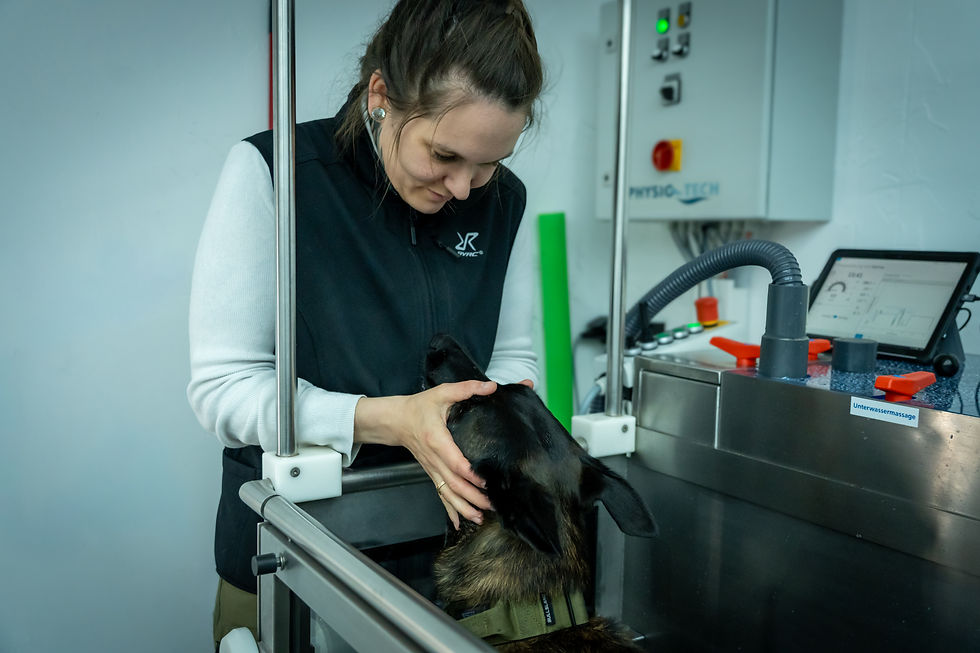
Their lives, responsibilities and training are all very different. Yet when I watch them move, I often find myself searching for the same thing: the small details that reveal how efficiently their bodies are coping with the demands of everyday life.
Many owners expect pain to look obvious. They imagine a dog refusing to use a leg, crying out, or showing clear signs of discomfort.
In reality, dogs are masters of adaptation.

A dog with mild discomfort may simply place a little more weight on another limb. A dog with reduced mobility may change the way it sits. A dog with early muscular imbalance may alter its posture without anyone noticing.
Dogs rarely complain. Instead, they compensate, and they can become remarkably good at it.
Some of the most memorable dogs I have worked with were never lame at all.
In fact, one case has stayed with me for years.
The owner almost cancelled the appointment.
"There is probably nothing wrong“, she told me.
Her dog was still running, playing and enjoying daily life.
Yet she had a feeling that something seemed different.
When I watched the dog move, I noticed a series of small changes. Nothing severe. Nothing that would have stood out to most people.
But together they painted a picture.

One side of the body was working harder than the other, muscle development was becoming uneven, and certain movements required more effort than they should have. The dog was coping well, but the body was already adapting.
That appointment reinforced something I see again and again.
Owners are often far more observant than they realize.
Many people contact me not because they have noticed a major problem, but because they feel that something has changed.
Sometimes they cannot even explain what it is.
Their dog takes slightly longer to get into the car, seems less enthusiastic about a favourite activity, chooses different resting positions, or simply feels different during training.
These observations matter. Not because every small change indicates disease or injury.
But because patterns matter.
The body is constantly providing information.

The earlier we learn to recognize those messages, the better we can support our dogs.
This does not only apply to sporting dogs or working dogs.
Of course, dogs involved in agility, protection work, obedience, detection work or other demanding activities place significant demands on their bodies.
However, family dogs are athletes too.
Their challenges simply look different.
They climb stairs, jump into cars, run across beaches, forests and fields, play with friends, accompany us on adventures and grow older beside us.
Every movement places demands on muscles, joints and the nervous system.
The difference is that most family dogs do not have coaches, trainers or handlers closely monitoring every aspect of their physical condition.
That responsibility belongs to us.
As owners, we do not need to become physiotherapists.
We do not need to analyse every step.
But we can learn to observe.
Watch your dog...
walk away from you.
rise after resting.
turn.
jump into the car.
Pay attention to changes rather than isolated moments.
One awkward movement means very little.
A consistent pattern may tell us much more.

What fascinates me most about canine physiotherapy is that it is not really about injuries.
It is about understanding dogs better.
Movement reflects;
confidence.
strength.
fatigue.
ageing.
health.
Every dog has a story, and that story is written in the way they use their body every single day.
Years later, I still remember the dog whose owner almost cancelled the appointment.
He never arrived as an emergency patient or experienced a dramatic injury.
In fact, many people would probably have described him as a perfectly healthy dog.
What made the difference was not a diagnosis, it was an owner who paid attention.
Someone who noticed that something felt slightly different and chose to trust that observation.
That dog reminds me why I love preventive physiotherapy - not because it helps us find problems, but because it helps us understand dogs before problems become bigger than they need to be.
Every day, dogs communicate through movement. They tell us when they feel strong, when they are tired and when they are adapting. Most of the time, they tell us these things long before they begin to limp.
We simply have to learn how to listen.
And for me, that is where the real value of canine physiotherapy begins.
About the Writer
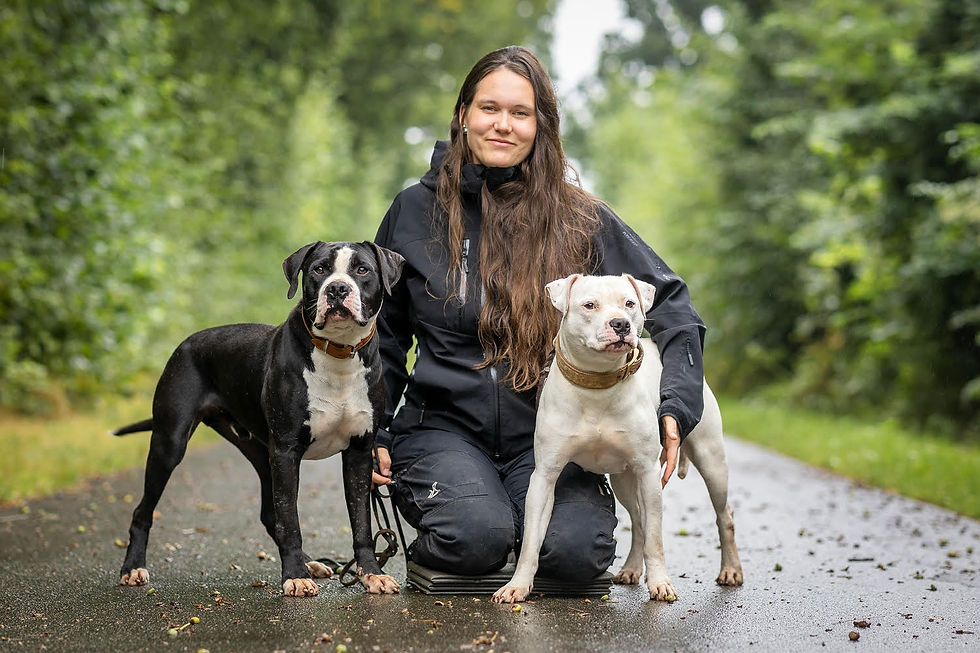
Sina-Marie Peuss is a canine physiotherapist from Germany with a background in veterinary medicine. She works with family dogs, sporting dogs and working dogs, with a particular interest in movement analysis, rehabilitation and preventive care.
Drawing on her experience in both veterinary medicine and physiotherapy, she focuses on helping owners recognize subtle changes in movement before they develop into more significant problems. Her work emphasizes the importance of early detection, functional movement and long-term musculoskeletal health.
In addition to her clinical practice, Sina-Marie is the author of several books on canine health and physiotherapy and regularly writes about canine movement, rehabilitation and performance. Alongside her work in Germany, she also collaborates with dog owners and handlers internationally through consultations, education and professional exchange.
Her goal is to help dogs remain active, comfortable and healthy throughout every stage of life. To follow Sina-Marie's work, check out her website and socials
Website: www.hundephysiotherapiepeuss.de
Instagram: @hundephysiotherapiepeuss


Comments